
.png)
Power differentials impact wellness

Updated: Jun 8
Let's ask AI how power differentials affect your wellbeing
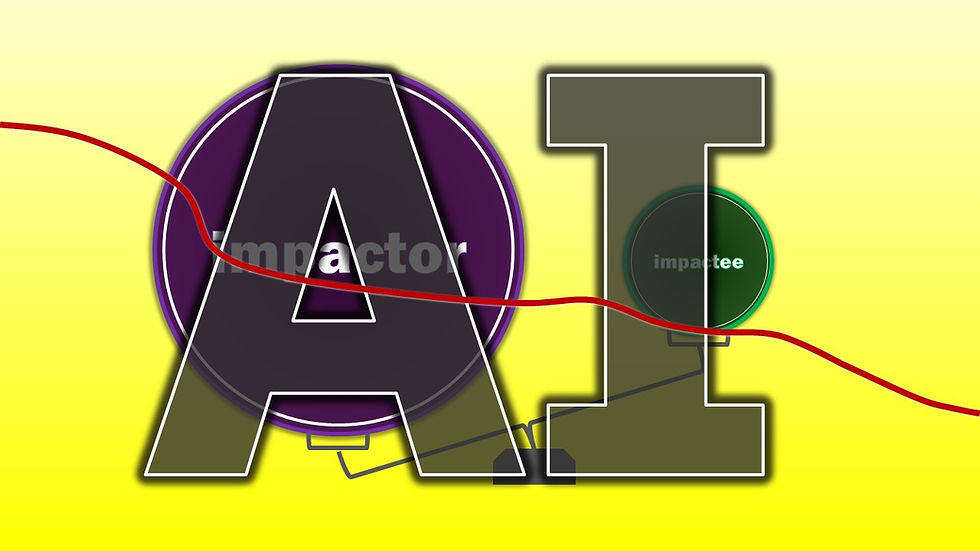

A "power differential" exists when one side of a relationship impacts the other more than impacted by it.
impactor: impacts the other side more than is impacted by it. I.e., powerholder.
impactee: impacted by the other side more than impacting it. I.e., relatively powerless.
I asked three different AI platforms the same prompt question: "How do power differentials from professionals and government officials impact the wellness level of those under their influence, for good or bad?"
Click these or scroll down for the results, provided verbatim.
Click these buttons to check for yourself this prompt in all three AI platforms.
Gemini_____________________________________________
Power differentials heavily dictate the wellness level of subordinates, significantly altering their physical health, mental stability, and community safety. When authorities wield power responsibly, they elevate public well-being, but systemic abuse or negligence rapidly degrades it.
📉 Negative Impacts (The Bad)
Chronic Stress: Constant surveillance or fear of authority triggers cortisol spikes. This weakens immune systems and accelerates cardiovascular disease over time. [1]
Help-Seeking Suppression: Fear of official judgment, deportation, or punishment stops individuals from reporting crimes or seeking medical care.
Institutional Trauma: Negative experiences with law enforcement, Child Protective Services, or biased medical professionals cause long-term anxiety and systemic distrust. [1]
Resource Deprivation: Officials hold the power to deny funding, housing permits, or clean water, directly forcing vulnerable communities into toxic living conditions.
Learned Helplessness: Prolonged lack of agency over personal outcomes leads to depression, apathy, and a total loss of motivation.
📈 Positive Impacts (The Good)
Safety Architecture: Proactive officials enforce labor laws, environmental regulations, and safety codes that prevent injuries and shield the public from corporate harm.
Psychological Safety: Compassionate professionals (like supportive doctors or ethical supervisors) reduce anxiety and create environments where individuals feel secure enough to thrive.
Resource Equity: Accountable leaders use their authority to distribute healthcare, educational funding, and social services directly to marginalized groups.
Empowerment Amplification: Traumatized individuals experience profound psychological healing when officials validate their rights, listen to their grievances, and enforce accountability.
When Gemini AI prompted again...
Power differentials shape wellness by controlling resources, validation, and autonomy. When authority figures use their power poorly, they create chronic stress and systemic harm. When used well, they build safety, equity, and community resilience. [1, 2]
Negative Impacts on Wellness
Chronic Stress: Constant subordination triggers prolonged cortisol release. This weakens immune systems. [allostatic load]
Institutional Trauma: Margining practices or systemic neglect by officials causes deep psychological distress.
Biased Healthcare: Medical gaslighting occurs when professionals dismiss patient symptoms. This worsens physical health outcomes.
Loss of Autonomy: Top-down government mandates can strip away personal agency. This lowers self-esteem and mental health.
Resource Deprivation: Discriminatory policies restrict access to clean environments, housing, and healthcare. This shortens life expectancy. [3]
Positive Impacts on Wellness
Systemic Protection: Strong public health policies eliminate large-scale health hazards. Clean water acts are one example.
Psychological Safety: Empathetic professionals reduce patient anxiety. Clear communication fosters trust and healing.
Resource Distribution: Supportive officials fund social safety nets. This relieves financial stress for vulnerable groups.
Empowered Advocacy: Shared decision-making in medicine improves patient compliance and recovery rates.
Community Resilience: Structural investments build safe spaces, parks, and clinics. This elevates collective well-being. [4, 5]
[1] https://www.nashconsulting.com
[2] https://www.newlocal.org.uk
[3] https://www.sciencedirect.com
[4] https://pmc.ncbi.nlm.nih.gov
Claude_____________________________________________
Power differentials between professionals/officials and those under their influence have profound effects on wellbeing — both protective and harmful. Here's a comprehensive look:
How Power Differentials Shape Wellness
The Core Dynamic
Power differentials are inherent in many relationships: doctor-patient, teacher-student, employer-employee, police-citizen, social worker-client. The asymmetry creates dependency, which amplifies both the benefit of good actors and the harm of bad ones.
Positive Impacts on Wellness
When authority is exercised responsibly, it can:
Provide safety and structure — Effective law enforcement, public health mandates, and zoning laws create environments where people can thrive physically and psychologically
Deliver expertise — A skilled physician or therapist uses their knowledge advantage to genuinely improve health outcomes; the patient benefits precisely because they defer to expertise
Reduce decision fatigue — Trusted institutions (schools, clinics) absorb complex decisions, freeing individuals from overwhelming cognitive load
Create equity — Officials can redistribute resources toward vulnerable populations, correcting market failures that would otherwise harm them
Offer protection — Child protective services, labor regulators, and consumer protection agencies shield people from exploitation they couldn't resist alone
Negative Impacts on Wellness
Psychological Harm
Learned helplessness — Chronic subordination can erode a person's belief in their own agency, contributing to depression and anxiety
Surveillance stress — Communities under heavy monitoring (welfare recipients, parolees, certain immigrant groups) show elevated cortisol levels and chronic stress responses
Epistemic undermining — When professionals dismiss a patient's or client's own account of their experience ("you're fine, nothing's wrong"), it damages self-trust and delays care
Physical Health
Medical paternalism — Historically, and still today, physicians overriding patient autonomy has led to harmful treatments, especially for women and minorities
Environmental racism — Government zoning decisions have disproportionately placed toxic facilities near low-income and minority communities, with measurable health consequences
Rationed care — Bureaucratic gatekeeping in insurance or public health systems can delay or deny life-improving treatment
Social & Community Harm
Institutional betrayal — When an organization fails to protect someone it was meant to serve (e.g., a school that ignores abuse), it compounds the original trauma significantly
Stigma reinforcement — Social workers, courts, and medical professionals who pathologize poverty or cultural difference can entrench shame and social exclusion
Coercive control — Welfare conditionality, mandatory treatment programs, or punitive policing can strip dignity and autonomy in ways that worsen mental health
Key Variables That Determine the Outcome
Factor | Healthier Outcome | Harmful Outcome |
|---|---|---|
Accountability | Professionals subject to oversight | Acting with impunity |
Consent & transparency | Client/patient informed and involved | Decisions made unilaterally |
Cultural humility | Power-holder understands context | Applies one-size-fits-all approach |
Trust | Relationship built over time | Transactional or adversarial |
Recourse | Appeals, complaints, alternatives exist | No exit or challenge mechanism |
Motive | Genuinely service-oriented | Self-interested or ideological |
What Research Shows
Therapeutic alliance in mental health care is one of the strongest predictors of positive outcomes — meaning how a clinician relates to the power gap matters enormously
Communities with high institutional trust show better public health compliance and better health outcomes overall
Adverse Childhood Experiences (ACEs) research shows that early exposure to abusive authority (parents, teachers, officials) has lifelong physiological effects on stress response systems
Studies on procedural justice in policing find that how officers treat people — fairly and respectfully — matters more to community wellbeing than actual outcomes of individual encounters
The Bottom Line
Power differentials are neither inherently good nor bad — they are force multipliers. A competent, ethical professional with power over a vulnerable person can be a profound source of healing and protection. That same structural position in the hands of someone negligent, biased, or exploitative becomes a mechanism of harm that individuals often have little ability to resist. This is why accountability structures, informed consent, transparency, and community voice are not just bureaucratic niceties — they are essential wellness infrastructure.
Copilot_____________________________________________
Power differentials held by professionals (e.g., doctors, social workers, educators) and government officials shape the wellness of people under their influence in both positive and negative ways. The core mechanism is simple: those with power control resources, decisions, and narratives, and this directly affects who gets to be healthy, safe, and heard.
Below is a structured explanation grounded in the evidence from your search results.
🧭 Core Takeaway
Power imbalances—especially when tied to structural oppression—are among the most upstream determinants of health and wellness. When power is used equitably, it improves community agency, access, and outcomes; when misused or concentrated, it reinforces inequities, stress, and poorer health. healthinpartnership.org SAGE Journals
🧩 How Power Differentials Affect Wellness
1. Structural Oppression → Chronic Inequities
Power held by institutions often reflects historical systems like racism, patriarchy, and class hierarchy. These systems determine who has access to resources such as housing, healthcare, education, and political voice.
These imbalances are described as “the most upstream cause of health inequities.” healthinpartnership.org
They shape life expectancy, chronic disease rates, and exposure to harm. SAGE Journals
2. Decision-Making Control → Whose Needs Are Prioritized
Government officials and professionals often decide:
What policies get funded
Which services are offered
Whose knowledge counts in planning
Webinar participants identified policymakers and healthcare institutions as the most influential actors in shaping health equity. partners4healthequity.org When communities lack influence, their needs are sidelined, reducing wellness.
3. Resource Distribution → Access to Care & Opportunity
Power determines who gets:
Funding
Health services
Infrastructure
Representation
Unequal distribution of resources perpetuates avoidable health differences. SAGE Journals
4. Community Agency → Psychological & Collective Wellness
When communities gain power—through shared decision-making, organizing, or representation—wellness improves.
Interventions that strengthen community knowledge and leadership rebalance power and improve health outcomes. SAGE Journals
Multisector collaborations that intentionally shift power increase people’s sense of influence and belonging. 81% of participants in one study reported increased power to influence their community. pophealthinnovationlab.org
5. Stress & Autonomy → Mental & Physical Health
Powerlessness is a chronic stressor.
Feeling unheard or controlled by institutions increases stress, reduces trust, and worsens health.
Conversely, shared decision-making and transparency reduce stress and improve engagement. pophealthinnovationlab.org
⚖️ When Power Is Used Well (Positive Impacts)
Shared decision-making increases trust and improves health outcomes.
Community power-building enhances agency and leadership. SAGE Journals
Transparent governance reduces inequities and increases participation.
Cross-sector collaboration helps communities address systemic drivers of health. partners4healthequity.org
⚠️ When Power Is Misused or Concentrated (Negative Impacts)
Policies may reinforce inequities (e.g., underfunding marginalized communities).
Professionals may impose solutions that don’t reflect community needs.
Structural barriers persist, limiting access to care, safety, and opportunity.
Community voices are minimized, reducing trust and worsening outcomes.
Stress and disempowerment increase, harming mental and physical health.
📊 Summary Table: How Power Shapes Wellness
Power Dynamic | Positive Impact | Negative Impact |
|---|---|---|
Decision-making power | Shared governance improves trust & outcomes | Exclusion leads to inequitable policies |
Resource control | Fair distribution improves access | Concentration deepens inequities |
Professional authority | Expertise can guide effective care | Paternalism reduces autonomy |
Community agency | Empowerment boosts wellness | Disempowerment increases stress |
Structural systems | Reform can dismantle inequities | Oppression perpetuates poor health |
🔍 A Non‑Obvious Insight
Power is not only about who holds it, but about which types of power are activated. Interventions that activate multiple forms of power—individual, collective, structural—are the ones that successfully shift inequitable systems. SAGE Journals
This means wellness improves most when:
Communities gain voice
Institutions change their internal processes
Policies redistribute influence and resources
TAKEAWAY |
Power differentials significantly impact the wellness of those under the influence of powerholders. Producing both negative and positive wellness outcomes. -- -- -- -- -- -- -- -- -- -- Until the new professional service of need-response came along, no current institution effectively bridged the two sides on an equal playing field. Only need-response incentivizes both sides to support each other to properly resolve needs to solve personal and social-structural problems. |


Comments